Well, here is a controversial topic! Film versus digital...
Film is almost gone on the consumer market. Digital is taking over. It's as simple as that. Many of the film manufacturers have already cut back on production and many others are going out of business. Companies like Kodak have shifted their emphasis to digital as well. Other companies like Agfa (a German film company) are going out of business. Still others like Polariod has had to make major changes to their product offerings just to stay in business. Did you know Polaroid now even makes portable DVD players?! What does THAT have to do with photos?
In the commercial photography world, film is far from dead. Many commercial photographers still shoot with medium format film (2.25 " x 2.25" is the film negative size) and also large format film (4"x5" and 8"x 10" film negative sizes) Film has a certain amount of lattitude that makes for very nice images that are not so "contrasty." It's great for commercial images.
But will digital even penetrate that market? In time, I think it will. Right now though, when we talk digital, most people think of it for use on point and shoot cameras and for things like weddings. Virtually every wedding photographer has migrated to digital today. The days of using medium format Hasselblad cameras for weddings is almost over. The Hasselblad was THE wedding photography camera for a long time when traditional-styled weddings were popular. They are very difficult to use for photojournalistic coverage because the cameras did not have the flexibility to move quickly (they are big and heavy). So many early photojournalistic wedding photographers simply used 35mm cameras. Image quality was not as good as the Hasselblad, but the image style is what they were after.
Today, digital has gotten so good that it rivals the best 35mm camera. And, many feel it rivals medium format quality as well. You see, the larger the negative size, the better the quality of the printed image because you don't have to enlarge as much as when you are printing from a small negative. Bigger is definitely better when it comes to film. Advances in film emulsion technology helped the 35mm cameras gain quality, but in general, bigger WAS better.
Today's digital cameras often tout 8 MegaPixels or greater. This means you should be able to easily print 16x20 prints that look very good. The megapixel issue itself does not guarantee quality as I mentioned in an earlier post on the topic. But in general, you can relate larger megapixels to be similar to larger film size. Bigger is generally better when it comes to making big prints.
You can't beat the instantaneous gratification you get when shooting digital as well. You know immediately if you've got a nicely exposed shot or a dark shot just by looking at the viewing screen after you've taken the picture. And you can decide to keep that image or simply delete it. Plus, to save money, you can just print the best images from a group of images and either delete the rest or just store it on your computer's hard drive or burn it on a CD-R. It's just so flexible.
So to recap, film is really on the way out for the general consumer market. It's just a matter of time. But right now, it's still very much alive in the commercial market with larger formats. And don't worry, if you haven't gone to digital yet and you are still shooting with 35mm film, you can still get film for your camera. But your days are numbered as more people move to digital. Film manufacturers will eventually realize the shrinking market isn't worth keeping up with. Just look at what's happened to Agfa.
Monday, October 31, 2005


Sunday, October 30, 2005
Hockey
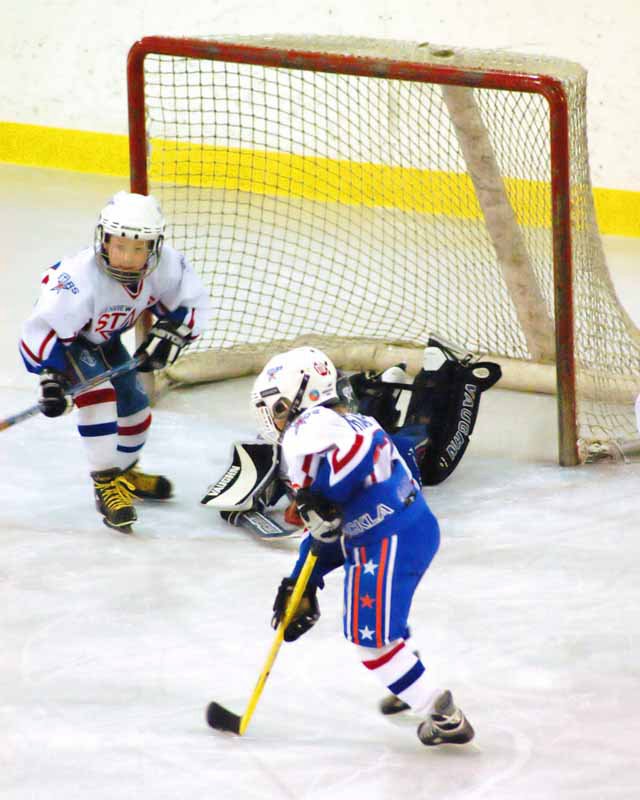
In soliciting for ideas to cover on my blog, one of my recent brides asked me how to shoot hockey games.
Well fortunately for her (and you), I actually shot a bunch of hockey games for one of the local kids leagues almost two years ago. I did this just for fun and found that a lot of the parents really liked the images I took because their little point and shoot cameras were not sufficient to do a proper job photographing hockey games.
I found that to shoot these games, you cannot shoot through the plexiglass that is often used to protect the fans. So, you either have to be in the penalty box (they don't let you do that unless you are a pro photographer...) or you have to go way up in the balcony areas so that you are shooting over the plexiglass.
This image was shot from up above.
To stop the action, you'll need to be at a shutter speed of over 1/250 second, preferably over 1/350 second if the action is really fast. You'll need to have a very fast lens as well, since the light in most hockey rinks is not too good. This means a lens of f 2.8 in maximum aperture. And, you'll need a zoom lens of at least 70-200mm or even up to 300mm in focal length.
Lastly, you'll need very fast film. In digital, you can just bump up the ISO rating (just like fast film). ISO 800 or ISO 1600 is a minimum.
So, can you shoot this with a point and shoot camera and get good results? Only if the players aren't moving around much. Otherwise, it requires an SLR camera with a long zoom lens and low noise ratings at high ISO settings.
Have fun!
Weird Ways To Send a Suspect To Prison
As I posted in a past entry, I've "dusted" a lot of items for fingerprints. But I recall sending someone to prison based solely on one special fingerprint I found at the scene of a burglary.
I was asked to go to a home that had been burglarized in Chula Vista, California. Several items had been taken from the home, so I could have started to dust for prints in the areas where the objects were taken. But I typically start by dusting the point of entry.
In this case the point of entry was through a bathroom window. This window was quite high up, perhaps five feet off the ground. For the burglar to gain access, he had to step up on something outside and then crawl through the window and then lower himself to the ground inside the home. Since it was a rather narrow window, he would have had to enter head first because you could not really "step through" the window. The only thing close to the window to help him get down was the toilet. "Hmmm, I wonder..."
I decided to dust the toilet seat for prints. To get down from that high window, I figured the burglar had to grab the toilet seat to lower himself down. Sure enough, I got a good print from the seat and submitted the print for the latent print examiners to compare against known prints in the NCIC database. We got a "hit."
That print sent the burglar to prison. I can just imagine other prisoners asking him how he got caught. What do you think he might say? "Uh, I left my prints on the toilet seat..." How embarassing!
If you thought that was strange, try this one!
I asked the supervisor of the crime lab at the Chula Vista PD what was the most unusual print he'd ever gotten, so he told me. He was at the scene of a bank robbery and was dusting for prints. While dusting for prints at the point of entry, which was the glass entry door to the bank, he noticed a smudge on the door at face level which looked awfully familiar. So he asked the tellers if anything unusual happened when the robber entered or left the bank. "Well, he bumped his head into the door when he left," said one of the tellers.
So, the supervisor decided to dust the smudge for later comparison. The smudge turned out to be in the exact shape of human lips. That's right... the guy "kissed" the door on the way out! In his haste to leave, he didn't realize the door was closed and bumped right into the door with his face and left a lip print.
After a suspect was found and brought into the PD for questioning, a comparison lip print was taken of him. Upon comparison to the lip print found at the scene, the lab supervisor (also a certified latent print examiner) determined that the characteristics of the lips' lines and "cracks" matched the suspect.
At the trial, the supervisor testified to his findings and the jury convicted the man of robbery. That was the first known case to ever have lip prints introduced as evidence at a trial and get a conviction.
Now if you thought telling the rest of the prison inmates that you were caught with a fingerprint you left on a toilet seat would be embarassing, how bad do you think it would be to say you got caught by a print you left of your lips?
I was asked to go to a home that had been burglarized in Chula Vista, California. Several items had been taken from the home, so I could have started to dust for prints in the areas where the objects were taken. But I typically start by dusting the point of entry.
In this case the point of entry was through a bathroom window. This window was quite high up, perhaps five feet off the ground. For the burglar to gain access, he had to step up on something outside and then crawl through the window and then lower himself to the ground inside the home. Since it was a rather narrow window, he would have had to enter head first because you could not really "step through" the window. The only thing close to the window to help him get down was the toilet. "Hmmm, I wonder..."
I decided to dust the toilet seat for prints. To get down from that high window, I figured the burglar had to grab the toilet seat to lower himself down. Sure enough, I got a good print from the seat and submitted the print for the latent print examiners to compare against known prints in the NCIC database. We got a "hit."
That print sent the burglar to prison. I can just imagine other prisoners asking him how he got caught. What do you think he might say? "Uh, I left my prints on the toilet seat..." How embarassing!
If you thought that was strange, try this one!
I asked the supervisor of the crime lab at the Chula Vista PD what was the most unusual print he'd ever gotten, so he told me. He was at the scene of a bank robbery and was dusting for prints. While dusting for prints at the point of entry, which was the glass entry door to the bank, he noticed a smudge on the door at face level which looked awfully familiar. So he asked the tellers if anything unusual happened when the robber entered or left the bank. "Well, he bumped his head into the door when he left," said one of the tellers.
So, the supervisor decided to dust the smudge for later comparison. The smudge turned out to be in the exact shape of human lips. That's right... the guy "kissed" the door on the way out! In his haste to leave, he didn't realize the door was closed and bumped right into the door with his face and left a lip print.
After a suspect was found and brought into the PD for questioning, a comparison lip print was taken of him. Upon comparison to the lip print found at the scene, the lab supervisor (also a certified latent print examiner) determined that the characteristics of the lips' lines and "cracks" matched the suspect.
At the trial, the supervisor testified to his findings and the jury convicted the man of robbery. That was the first known case to ever have lip prints introduced as evidence at a trial and get a conviction.
Now if you thought telling the rest of the prison inmates that you were caught with a fingerprint you left on a toilet seat would be embarassing, how bad do you think it would be to say you got caught by a print you left of your lips?
Saturday, October 29, 2005
Nikon D200 - Soon To Be Released

It seems every couple of months a new camera comes out to replace a model that has been on the market for only a year. It’s often a very short store shelf life for digital cameras.
But that has not been the case for the Nikon D100 camera (I have two). It has remained in the Nikon digital camera line for three years (I've had mine for almost two years.) Sure, Nikon answered with a less expensive model called the D70 (later upgraded to the D70s with a very slight improvement in features) and now the new D50 which is their newest entry level DSLR (digital single lens reflex) camera.
The flagship model, the D1x was replaced with the D2x but not before we saw a specialty sports camera called the D2H (later to be replaced by the D2Hs). Interesting though, even though a less expensive model was introduced with slightly better performance (D70 / D70s), the D100 remained in the line until recently. Many questioned why that was the case. After all, it was more expensive than the D70, had slightly older features, and was, well, just plain older! But the D100 was built better. It had a stronger body, an optional vertical grip and shutter release button, and provisions for an extra battery. Pros that were used to the camera kept it and didn’t move to the lower priced D70. But they did buy the D70 as their backup camera. Interesting.
For me, instead of buying a D70 as a backup camera, I went and bought another D100 as a secondary camera. My logic? I was already making great photos with the D100 and having two identical cameras made it that much easier to quickly switch from one to the other. You don’t have to think about it. You just react.
I actually shoot with three cameras at many weddings. No, these are not backup cameras, but are utilized along with the main camera. I’m faster that way, although it is more cumbersome at times.
But, the D100 is soon to be replaced, after a three year reign. Rumor has it that the D200 is expected to be announced in November and I’ve already seen photos of the camera. How can that be if they haven’t even announced it? Well, Nikon “accidentally” had a photo of the D200 and its specifications up on their own website for a short time. After realizing their mistake, they quickly took it off the website. You see, Nikon is one of the most secretive camera companies and won’t let any information out until the official announcement date. So you can imagine their surprise to find that the leak came from themselves! But that page has been screen saved and circulated around the internet now, so it’s no longer really a secret. Even large detailed photos of all angles of the camera have been circulated.
Like many pros who have been anticipating the new camera, I hope to replace my trusty D100 cameras with either the new D200 or perhaps the next generation of the Fuji S3 Pro camera. The S3 Pro has a sensational image sensor and the colors that come out of it are fantastic. The body is based on the same basic body that the D100 is based on, so they function very similarly. Fuji is essentially a Nikon clone but has features and a sensor unique to them. They both use Nikon lenses.
If Fuji were to release an “S4 Pro,” I’d be very tempted to get one! But I expect that an S4 will be a LOT more expensive than the D200. So the most logical upgrade path for me right now would be to purchase two D200’s.
In preparation for the D200’s arrival on the store shelves, I figure I might as well let everyone know I’m looking for buyers for my two cameras and two vertical grips. But I won’t sell them until the D200 is actually ready to be put in my hands. That could mean December or January depending on supply. However, if you know of anyone who might be interested in one or two D100 / MB-D100 cameras with vertical release grips, please let me know. Both cameras are in excellent condition as I am very careful with my camera gear.
In the meantime, the D100 continues to perform and provide excellent images for all my weddings! If nobody buys these cameras from me, I am not hindered in any way as it is a very familiar camera to me and I expect it to perform as flawlessly as when I first bought them. Let me know if you know anybody in the market for a DSLR camera!
Photo Info: This image of the Nikon D100 was taken with a Fuji F10 point and shoot camera set on Auto mode with flash. The small metal plate on the bottom of the vertical grip is a Newton bracket quick release plate. It's not included with the camera if sold.
Friday, October 28, 2005
New!!! Collage Enlargement Prints
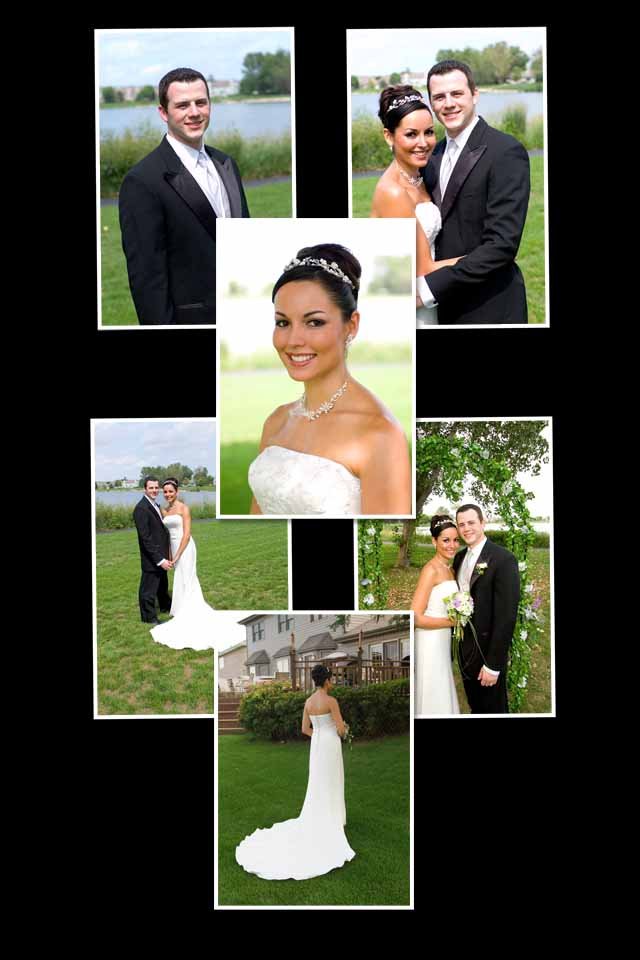
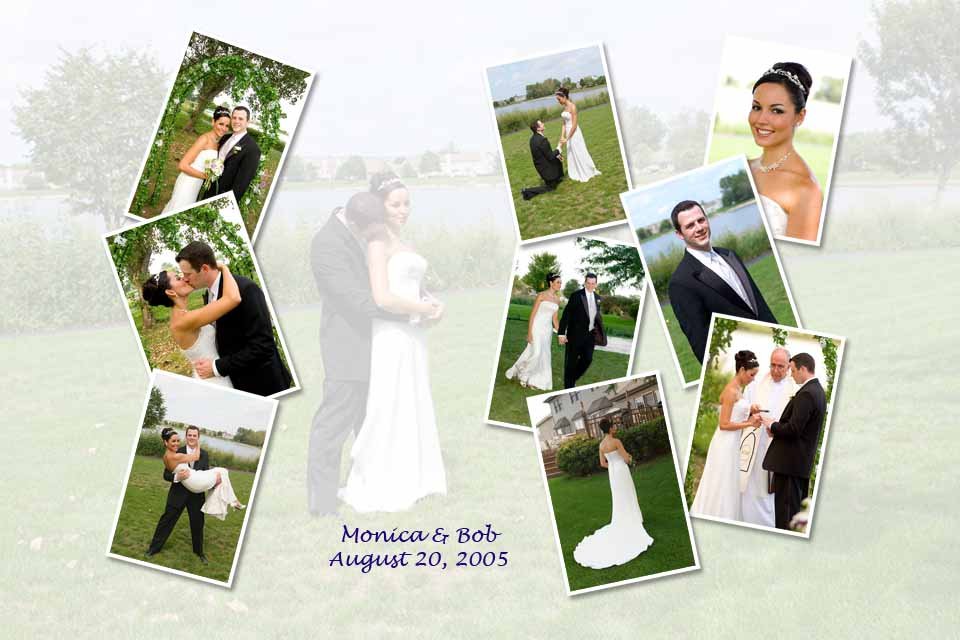
Collages are great for desk prints or wall prints. It’s a great way to showcase your wedding all in one image. I can create a collage from as many images as you like using the images I photographed at your wedding. Just let me know the image file number you would like for the background and then the image file numbers of each item in the collage and I’ll make it. Each collage is a unique image created especially for you.
Email or call if you would like one of these made from your wedding.
Thursday, October 27, 2005
Top Ten Things To Look For In A Wedding Photographer
Here's a list to consider:
10. Value (digital files given to client, prints of all images)
9. Insurance (Liability and Errors & Omission Insurance)
8. Shooting Style (Traditional, Photojournalistic or Blended)
7. Communications (From booking date to wedding date)
6. Experience
5. Quality and Consistency of Images (Photoshop enhancement)
4. Reliability (Punctuality)
3. Personality (relaxed, casual, fun)
2. Comfort Level (your comfort level with the service provider)
1. Trustworthiness & Reputation
I thought about the things that my past clients have told me about why they hired me and came up with this list. I figured this might be good for new potential clients to see not only in evaluating me, but in evaluating other vendors as well. The hardest part was coming up with an order sequence to fit the David Letterman style of counting down the Top Ten List.
Actually, I don’t think anyone can actually put these qualities in an order sequence that would fit everyone. After all, what is most important to one person, may not be as important to another. So, consider the list simply a list and not the definitive list in terms of order sequence.
10. Value (digital files given to client, prints of all images)
9. Insurance (Liability and Errors & Omission Insurance)
8. Shooting Style (Traditional, Photojournalistic or Blended)
7. Communications (From booking date to wedding date)
6. Experience
5. Quality and Consistency of Images (Photoshop enhancement)
4. Reliability (Punctuality)
3. Personality (relaxed, casual, fun)
2. Comfort Level (your comfort level with the service provider)
1. Trustworthiness & Reputation
I thought about the things that my past clients have told me about why they hired me and came up with this list. I figured this might be good for new potential clients to see not only in evaluating me, but in evaluating other vendors as well. The hardest part was coming up with an order sequence to fit the David Letterman style of counting down the Top Ten List.
Actually, I don’t think anyone can actually put these qualities in an order sequence that would fit everyone. After all, what is most important to one person, may not be as important to another. So, consider the list simply a list and not the definitive list in terms of order sequence.
Facing Your Guests

Most often, the bride and groom face forward at weddings making it difficult for the guests to see their faces during the ceremony. Well here’s a novel approach to solve that problem.
If you have steps at the front of the church, consider this position as an alternative to the standard “line-up.” The bride and groom take the top landing facing the guests and each attendant takes a step below. The priest and alter boy have taken the lowest position. The bridal party form a semi-circle with their positions so that everyone can see them. The priest and alter boy complete the circle.
It’s great for the guests and great for the photography as well. I was able to photograph this wedding without sneaking in front just to get a shot of the bride & groom’s face during the ceremony. I wasn’t allowed in front anyway due to the church’s restrictions.
Wednesday, October 26, 2005
Common Misconceptions Regarding Crime
One of my pet peeves is the incorrect usage of terms as they relate to crimes.
For instance, a house can be burglarized. A person can't. A person can be robbed. A house can't. A house cannot be robbed, only burglarized.
Assault and Battery are not the same thing. Assault is the threat of an attack. Battery is the physical contact of that threat. A person can be assaulted without battery.
Blood spatters, it doesn' splatter.
A person is not found INNOCENT when a jury comes back with a not guilty verdict. He or she is NOT GUILTY instead. There's a big difference. TV anchor people make this mistake A LOT. A person can be found NOT GUILTY but actually be guilty of committing the crime. Simply because there was not enough evidence to convict with a "GUILTY" verdict, the jury often returns a "Not Guilty" verdict. So if a person is not guilty, it is possible that he/she is not innocent of the crime.
A hung jury is a term indicating that the jury could not reach a unanimous decision. It is not an indicaton of a not guilty status or verdict. A hung jury is still considered a mistrial.
A person can be tried for the same crime as many times as it takes to get a verdict. Double jeopardy only occurs if a person is attempted to be tried for the same crime after being found not guilty in the first trial.
A projectile is not a bullet and a bullet is not a projectile.
Bullets are not housed in a "clip" in a semi-automatic weapon. They are housed in a magazine.
Bullet casings are not "shells."
You never pick up a gun at a crime scene by putting a pencil in the gun barrel.
You don't use a pencil to shade in the indentations found on notepads at a crime scene to see what was written on the paper above.
People can be hanged, not hung. Pictures are hung on walls.
Criminalists are not criminals. They are crime scene specialsists.
Polygraph Exams (Lie Detector tests) are not admissible as evidence in court.
Voice Identification is not admissible as evidence in court.
Criminals do not always return to the scene of the crime.
There's no such thing as a victimless crime.
I can go on and on....
For instance, a house can be burglarized. A person can't. A person can be robbed. A house can't. A house cannot be robbed, only burglarized.
Assault and Battery are not the same thing. Assault is the threat of an attack. Battery is the physical contact of that threat. A person can be assaulted without battery.
Blood spatters, it doesn' splatter.
A person is not found INNOCENT when a jury comes back with a not guilty verdict. He or she is NOT GUILTY instead. There's a big difference. TV anchor people make this mistake A LOT. A person can be found NOT GUILTY but actually be guilty of committing the crime. Simply because there was not enough evidence to convict with a "GUILTY" verdict, the jury often returns a "Not Guilty" verdict. So if a person is not guilty, it is possible that he/she is not innocent of the crime.
A hung jury is a term indicating that the jury could not reach a unanimous decision. It is not an indicaton of a not guilty status or verdict. A hung jury is still considered a mistrial.
A person can be tried for the same crime as many times as it takes to get a verdict. Double jeopardy only occurs if a person is attempted to be tried for the same crime after being found not guilty in the first trial.
A projectile is not a bullet and a bullet is not a projectile.
Bullets are not housed in a "clip" in a semi-automatic weapon. They are housed in a magazine.
Bullet casings are not "shells."
You never pick up a gun at a crime scene by putting a pencil in the gun barrel.
You don't use a pencil to shade in the indentations found on notepads at a crime scene to see what was written on the paper above.
People can be hanged, not hung. Pictures are hung on walls.
Criminalists are not criminals. They are crime scene specialsists.
Polygraph Exams (Lie Detector tests) are not admissible as evidence in court.
Voice Identification is not admissible as evidence in court.
Criminals do not always return to the scene of the crime.
There's no such thing as a victimless crime.
I can go on and on....
Drugs
“I’ve dealt with more drugs than most drug dealers.”
That’s a strange thing to write. But it’s true.
For someone who is about "as straight as they come,” I can honestly say that I’ve dealt with a lot of drugs. No, I didn’t sell it and neither did I take it! I’ve collected it at crime scenes and I’ve fingerprinted containers of it. Crack, marijuana, speed… you name it. I just love seeing the look on people’s faces when I tell them that. They always miss the word “with” when they hear that sentence.
The one thing I think that is common about drugs is that it’s not pretty. It doesn’t come in pretty containers… it comes in cheap plastic Ziploc bags, dirty crack pipes, dirty spoons, rolled up dollar bills, you get the picture. It’s not glamorous.
Every police crime lab I’ve ever visited seems to smell like marijuana too. Why? Because they have lots of it! And that stuff just reeks! I recall going to work one day at the Chula Vista Police Department (California) and the whole place smelled like marijuana. The drug team had made a huge bust and we collected over 800 lbs of the stuff! That’s a huge amount of drugs. After all, how much can dried weeds weigh? That place smelled like marijuana for a long time…
Crimes that occur because of drugs affect not only the victim and their family, but also the criminal’s family as well. After opening my own forensic services company, I recall being hired privately by the defense team of an accused murderer. This man had decided to burglarize his neighbor's home to steal things so he could sell them for money to support his habit. Well, he didn’t know his neighbor was home and was caught in the act. A struggle ensued and the man killed his neighbor.
Obviously the neighbor’s family was affected by this crime. But what I learned by working on the defense side of this case is that the murderer’s family was also affected. You see, he was a single father of two young girls. When he went to prison, he also lost his family at the same time.
I was hired by the defense to create a “day in the life” video of his two girls. I taped them playing on the playground and doing their other “every day” activities. The defense had hoped that by showing the tape, they might be able to get a lighter sentence for the man. I had a chance to talk to the man’s sister while doing my work. I had never spoken with the defense’s family in the past while working for the DA’s office. His sister explained to me that she was going to care for these girls now that her brother was going to prison. She told me about how her brother was such a good person but had gotten into drugs and that ruined his life. Now he was going to prison. Her tears were genuine and I couldn’t help but feel sorry for her and for his kids.
When you work on the prosecution side, sometimes you forget about the families on the other side. We sometimes get so caught up worrying about the victim and their families that we forget that another family also suffers from these crimes. It’s not that the murderer’s sister wanted this to happen or that she deserved to have this happen. In a sense, she was a victim too. Just as his kids were victims of his crime as well.
That day helped me to understand that both sides lose when it comes to drug cases.
What happened to the murderer? He got the maximum sentence. I shot a great video, but murder is murder. He got what he deserved.
Don’t take drugs… it affects everyone.
That’s a strange thing to write. But it’s true.
For someone who is about "as straight as they come,” I can honestly say that I’ve dealt with a lot of drugs. No, I didn’t sell it and neither did I take it! I’ve collected it at crime scenes and I’ve fingerprinted containers of it. Crack, marijuana, speed… you name it. I just love seeing the look on people’s faces when I tell them that. They always miss the word “with” when they hear that sentence.
The one thing I think that is common about drugs is that it’s not pretty. It doesn’t come in pretty containers… it comes in cheap plastic Ziploc bags, dirty crack pipes, dirty spoons, rolled up dollar bills, you get the picture. It’s not glamorous.
Every police crime lab I’ve ever visited seems to smell like marijuana too. Why? Because they have lots of it! And that stuff just reeks! I recall going to work one day at the Chula Vista Police Department (California) and the whole place smelled like marijuana. The drug team had made a huge bust and we collected over 800 lbs of the stuff! That’s a huge amount of drugs. After all, how much can dried weeds weigh? That place smelled like marijuana for a long time…
Crimes that occur because of drugs affect not only the victim and their family, but also the criminal’s family as well. After opening my own forensic services company, I recall being hired privately by the defense team of an accused murderer. This man had decided to burglarize his neighbor's home to steal things so he could sell them for money to support his habit. Well, he didn’t know his neighbor was home and was caught in the act. A struggle ensued and the man killed his neighbor.
Obviously the neighbor’s family was affected by this crime. But what I learned by working on the defense side of this case is that the murderer’s family was also affected. You see, he was a single father of two young girls. When he went to prison, he also lost his family at the same time.
I was hired by the defense to create a “day in the life” video of his two girls. I taped them playing on the playground and doing their other “every day” activities. The defense had hoped that by showing the tape, they might be able to get a lighter sentence for the man. I had a chance to talk to the man’s sister while doing my work. I had never spoken with the defense’s family in the past while working for the DA’s office. His sister explained to me that she was going to care for these girls now that her brother was going to prison. She told me about how her brother was such a good person but had gotten into drugs and that ruined his life. Now he was going to prison. Her tears were genuine and I couldn’t help but feel sorry for her and for his kids.
When you work on the prosecution side, sometimes you forget about the families on the other side. We sometimes get so caught up worrying about the victim and their families that we forget that another family also suffers from these crimes. It’s not that the murderer’s sister wanted this to happen or that she deserved to have this happen. In a sense, she was a victim too. Just as his kids were victims of his crime as well.
That day helped me to understand that both sides lose when it comes to drug cases.
What happened to the murderer? He got the maximum sentence. I shot a great video, but murder is murder. He got what he deserved.
Don’t take drugs… it affects everyone.
Tuesday, October 25, 2005
Effects
 Before

After
Before... After... Kind of reminds me of the weight loss ads...
Adobe Photoshop can do a lot of things. Here I've taken a twist on a standard alter shot and turned it into something different. The zoom effect is done by first blocking out the area that won't be zoomed and creating a framed/dropshaddowed border around it. Then, the rest of the image is fair game. This particular image grabs a lot of attention from my potential clients. It's not something you see everyday. But it is something that can be applied to images if you know how. Takes a little time to create, but the effort is worth it for a unique image from your wedding.
Photo info: This image was taken at the last wedding I shot in 2004... December 30. The ceremony was shot entirely with ambient light (no flash). The church was nicely lit but still too dark to handhold a camera without introducing camera shake to the image. So each of the images were created using a tripod. Slow shutter speeds and wide apertures on the lens were necessary to produce the images. But the results were fantastic. It looks like daylight in there after the necessary things were done to the image. Shot in RAW format which allows a professional photographer to manipulate the various aspects of the digital image without damaging the image, I was able to increase the exposure settings, color balance the image and really make the image "pop."
Monday, October 24, 2005
Super Glue Fuming
Did you know that “Super Glue” has a place in forensic science?
The glue commonly known as “Super Glue” or “Krazy Glue” is actually a substance that is chemically known as Methyl-2-cyanoacrylate. Another version of this glue is also known as 2-octyl-cyanoacrylate which is a medical glue with common names of “Dermabond” and “Traumaseal.”
Cyanoacrylate, or “CA” as it’s sometimes called, is able to stick a lot of things together including skin. But it also has a unique property to help “develop” fingerprints that are left on certain objects. When left uncovered in a slightly moist environment, the glue gives off a fume that attaches to fingerprints and “fixes” the print in place. Once developed, it leaves a white residue on the surface where the print is found. This can then be “dusted” with fingerprint powder and then “lifted” with fingerprint lift tape and then placed on a latent fingerprint card for comparison.
If you’ve ever looked at the inside of the plastic bubble packaging that Super Glue often comes in, you might have noticed some white powdery stuff inside… often looking like someone’s fingerprint. Well, guess what? :)
For forensic work, the CA comes in thin pouches about the size of a 4x6 photo. The glue is spread out across the inside of the front and back of the pouch which is exposed when the pouch is pulled open. Typically, for small items like handguns or soda cans or similar items, a 10 gallon glass aquarium with a lid might be used as a container to perform the fuming. A small jar of warm water is placed inside along with the item being fumed. After about 15-20 minutes, you can often see the white powder forming on the objects inside. Once the glue has “fixed” the prints, it’s there for a long time. Not only can the prints be photographed, dusted and lifted, but it can be done several times as well.
I’ve done my fair share of dusting evidence for prints… probably covering thousands of evidence items. But Super Glue fuming is one of my favorite ways to get a print off of things like guns, soda cans and plastic items.
I also recall placing several packets of Super Glue inside a van that we pulled out of the Chula Vista harbor one day. The vehicle was found partially sunken in the boat dock with the body of a woman inside. After pulling the van out of the water with a tow truck (and of course removing the body) we towed the vehicle back to the police department and used the Super Glue to try to develop fingerprints inside the van. We just rolled up the windows and placed the glue inside to do the job. Worked great!
To see a sample of what these Super Glue packets look like, visit this site.
More fingerprint techniques in future postings here. Keep visiting daily! :)
The glue commonly known as “Super Glue” or “Krazy Glue” is actually a substance that is chemically known as Methyl-2-cyanoacrylate. Another version of this glue is also known as 2-octyl-cyanoacrylate which is a medical glue with common names of “Dermabond” and “Traumaseal.”
Cyanoacrylate, or “CA” as it’s sometimes called, is able to stick a lot of things together including skin. But it also has a unique property to help “develop” fingerprints that are left on certain objects. When left uncovered in a slightly moist environment, the glue gives off a fume that attaches to fingerprints and “fixes” the print in place. Once developed, it leaves a white residue on the surface where the print is found. This can then be “dusted” with fingerprint powder and then “lifted” with fingerprint lift tape and then placed on a latent fingerprint card for comparison.
If you’ve ever looked at the inside of the plastic bubble packaging that Super Glue often comes in, you might have noticed some white powdery stuff inside… often looking like someone’s fingerprint. Well, guess what? :)
For forensic work, the CA comes in thin pouches about the size of a 4x6 photo. The glue is spread out across the inside of the front and back of the pouch which is exposed when the pouch is pulled open. Typically, for small items like handguns or soda cans or similar items, a 10 gallon glass aquarium with a lid might be used as a container to perform the fuming. A small jar of warm water is placed inside along with the item being fumed. After about 15-20 minutes, you can often see the white powder forming on the objects inside. Once the glue has “fixed” the prints, it’s there for a long time. Not only can the prints be photographed, dusted and lifted, but it can be done several times as well.
I’ve done my fair share of dusting evidence for prints… probably covering thousands of evidence items. But Super Glue fuming is one of my favorite ways to get a print off of things like guns, soda cans and plastic items.
I also recall placing several packets of Super Glue inside a van that we pulled out of the Chula Vista harbor one day. The vehicle was found partially sunken in the boat dock with the body of a woman inside. After pulling the van out of the water with a tow truck (and of course removing the body) we towed the vehicle back to the police department and used the Super Glue to try to develop fingerprints inside the van. We just rolled up the windows and placed the glue inside to do the job. Worked great!
To see a sample of what these Super Glue packets look like, visit this site.
More fingerprint techniques in future postings here. Keep visiting daily! :)
Sunday, October 23, 2005
Cropping
Cropping images to fit the most popular frame sizes reduces the aspect ratio of photos. Most professional digital single lens reflex cameras (DSLR) are set to shoot a perfect 2x3 aspect ratio. This is because many initial prints are made at the 4x6 size (twice the 2x3 ratio.) But often, you may want enlargements made. These can be the typical sizes like 5x7, 8x10 or 11x14. Each of these sizes reduce the overall image either vertically or horizontally.
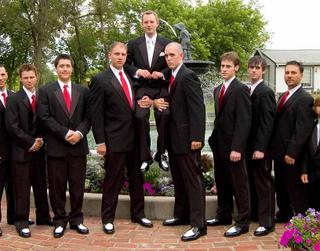
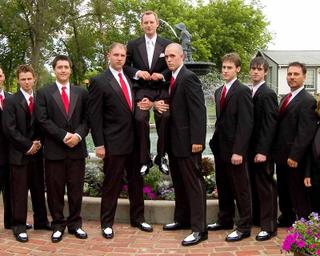
Below are several images to show how much of the image is actually lost during cropping.
Let's assume the image labeled 4x6 is our beginning point. I purposedly made this image fit from edge to edge so it will be easier to see how many people get "cropped out" once we start cropping. If an image is shot without any space at the farthest edge of a "landscape" oriented picture (horizontal orientation), you can expect the image will lose some people when cropped. I have placed these in order of the least amount of loss to the greatest amount of loss. As you can see, the worst crop is 8x10. A lot of the image is lost at this aspect ratio.
The second to the last picture is what I would consider the absolute minimum space needed at the far edges of the picture to allow cropping with any of the popular crop sizes without losing any people. It also leaves a very small space at each edge so that the people do not seem so crowded at the edge. Anything less than this would be a disappointment if cropped to 8x10 because you will lose some of the people.
Often, I like leaving even MORE space than the minimum... maybe twice as much. This way, the 8x10 crop will look like it had the space left by the photo of the minimum crop. Since it's hard to know which images I shoot might be turned into an 8x10, it's best to assume all the images might be made into enlargements. The last picture is the original image shot at the wedding.
Vertical images are similarly cropped, but the top and bottoms of the image would be cropped instead.
(Please note that many "point & shoot" cameras do not start at the 2x3 ratio. I'm not sure why camera companies do that. That makes it more difficult to estimate the best inital crop.)
Below are several images to show how much of the image is actually lost during cropping.
Let's assume the image labeled 4x6 is our beginning point. I purposedly made this image fit from edge to edge so it will be easier to see how many people get "cropped out" once we start cropping. If an image is shot without any space at the farthest edge of a "landscape" oriented picture (horizontal orientation), you can expect the image will lose some people when cropped. I have placed these in order of the least amount of loss to the greatest amount of loss. As you can see, the worst crop is 8x10. A lot of the image is lost at this aspect ratio.
The second to the last picture is what I would consider the absolute minimum space needed at the far edges of the picture to allow cropping with any of the popular crop sizes without losing any people. It also leaves a very small space at each edge so that the people do not seem so crowded at the edge. Anything less than this would be a disappointment if cropped to 8x10 because you will lose some of the people.
Often, I like leaving even MORE space than the minimum... maybe twice as much. This way, the 8x10 crop will look like it had the space left by the photo of the minimum crop. Since it's hard to know which images I shoot might be turned into an 8x10, it's best to assume all the images might be made into enlargements. The last picture is the original image shot at the wedding.
Vertical images are similarly cropped, but the top and bottoms of the image would be cropped instead.
(Please note that many "point & shoot" cameras do not start at the 2x3 ratio. I'm not sure why camera companies do that. That makes it more difficult to estimate the best inital crop.)

4x6

5x7
11x14
8x10
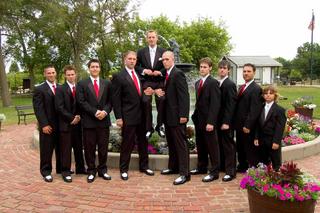
Minimum image width needed before cropping

Original Image taken at the wedding
Saturday, October 22, 2005
Interior Photography

This is a shot of the kitchen at one of my recent backyard weddings.
Interior photography can often be tricky. At times, the lighting may not be even or the best angle needs to be discovered to give the room an interesting view.
In this case, I had several light sources going on. There was natural sunlight coming in from the window by the sink and also behind me from the back door and windows, incandescent lighting from the recessed lighting fixtures in the ceiling as well as from the accent lights from the purple hanging fixtures and of course, my flash.
Finding the right balance with all the light sources was critical because choosing only one source as the key light would make the other light sources either too dim or too bright. After evaluating what light I had, I decided that the largest light source was the light behind me… the sunlight coming in from the back door and windows. So I decided to set the camera to get the best exposure based on the natural sunlight. Luckily the light from the back was not enough to blow out the nice accent lighting from the incandescent lights which provided the warm orange glow on the wall near the walk-in pantry.
To get more light to the area near the stove, I decided to add a touch of flash which was diffused by a Gary Fong Lightsphere II light modifier. The flash was set to compliment the sunlight so as not to blow out details in the foreground, but to offer just enough balanced light to lighten up the background of the image.
So do you think taking an interior photo is easy? Take a look at the technical data below and you’ll see how it was done.
Technical Data (for those who want to learn how to shoot like this): The image was taken handheld with a Nikon D100 digital camera set at ISO 200 and a Nikon 12-24mm F 4.0 DX lens set at 12mm. The manual exposure was 1/60 sec at f 4.5 with an exposure compensation set at the camera of +1/3 EV. The flash used was a Vivitar 283 with the auto-thyristor set at f 4.0. The flash was modified with a Gary Fong Lightsphere II light modifier. A custom tone curve was added to the D100 camera to increase mid-tone details and the image was captured in RAW format. No in-camera sharpening was used. The RAW file was converted with Adobe Camera RAW (ACR.) The image was white balanced and exposure compensated in ACR and then sent to Photoshop where it was sharpened with unsharp mask set at 95-1-1 and then saved as a jpg image. This version of the image was downsized with Photoshop for web presentation.
Friday, October 21, 2005
My First Homicide Case - Warning: Graphic Content
Did you know that if you put a warning like, "Warning: Graphic Content" that this will not keep people away from reading things that they might find offensive or disgusting? In fact, you REALLY want to read it now, don't you?!!! :)
I mentioned that my second autopsy was a direct result of comments I had made during the autopsy from my first homicide case, but I never told you what the first case was!
We had been called out on a homicide at a trailer park on Saturday afternoon. The owner of a trailer home had shot at a burglar who had awaken him from sleeping. The burglar later died. So this was a case of "Was it self defense, or murder?" Although it sounds like a fairly routine case to work on, it really wasn't.
The burglar was an African-American male who had come into the trailer looking to steal whatever he could. Not knowing that the owner was still in the trailer, he began taking whatever he thought was of value. The owner, a white male in his 60's who had been sleeping in the back of the trailer, awoke and found the burglar in action. According to the owner, the burglar had a knife with him and came towards the owner. Fearing for his life, the owner quickly grabbed his .22 caliber rifle near his bed and began to shoot at the burglar. The burglar turned and headed for the door. During the shooting, the rifle jammed. "Oh, the gun jammed!" exclaimed the owner. Upon hearing this, the burglar turned around and headed back into the trailer to try to take a few more items before leaving! In the meantime, the owner unjammed his gun and began to fire again. This time his aim was good and the burglar was shot.
Stumbling out the door, the burglar dropped the items he had stolen and leaped over the fence directly behind the trailer hoping to get away from the gun fire. He was successful in getting over the fence. But what he didn't expect was the 200 feet drop to the ground below.
You see, the fence was what kept people from falling over a cliff that it was blocking. The burglar fell 200 feet below and later died. Amazingly, the man did not die immediately. After being shot and taking a 200 feet fall, he was still alive. He later died in the ambulance that was called to help him. After his autopsy, it was determined that he had died from the gunshot wound and not from the fall.
Well before we had the findings from the autopsy which we later went to, we had to determine if the owner had shot the burglar as an act of self defense or whether he continued to fire after the threat was gone. You see, if you are in danger for your life, you can use lethal force to defend yourself. But once the danger to your life ceases (like when a burglar is running AWAY from you), you cannot continue to keep shooting at him because that life threatening situation is no longer life threatening. The owner now found himself as a possible murder suspect!
People usually think of a homicide as the "illegal" killing of another human being. This is not true. A homicide is actually the killing of one human being by another human being, whether it is legal or illegal is not a factor in calling the killing a homicide. See, you learned something today, didn't you? :)
Anyway, our job was to find out if the owner of the trailer continued to shoot after the threat was gone. Through our search of the trailer and the surrounding area, we determined that his shooting was justified because we had found spent casings of the bullets inside the trailer and not outside. He had shot at the burglar just as he described...while his life was in danger inside the trailer, but stopped shooting after the man left the trailer. It was a justifiable homicide.
Oh, I almost forgot to mention... the trailer's lot number was 187. Now that probably doesn't mean much to anyone who is not from California. But remember, I had worked with the San Diego Police Department. In the California Penal Code book, the penal code number for a homicide is PC187. Coincidence or just plain spooky?!
At the autopsy, I got to see things I had only read about in books and seen in movies. Amazingly, I found that I was not panicked about being there and actually found it quite interesting. I recall everyone leaving the examination room with only me inside with the burglar on the examination table. All of his "insides" had been removed and only the surrounding back ribs were exposed as he laid face up on the table. The front ribs had already been removed leaving a concaved shell. The front rib cage is removed by what I can only call Gardening Shears. After the incisions are done, the rib cage is actually taken off by huge shears that break the ribs and then the front rib cage is taken off to reveal the organs. The organs are then removed, examined and weighed. The blood that is inside the body is removed by a laddle and placed in a container. So only the outer "shell" of the person is left when everything is removed.
I stood over his body and looked down into it. It was amazing. I remember thinking, "What kind of person can handle an autopsy?" Apparently I could. So the answer must be, "People like me."
After everything was over, the medical examiner came over to me and asked me what I thought of my first autopsy. "Not bad," I said. "Well at least it wasn't a stinker!"
See my earlier post, "Now For Something Really Gross..." for details on the results caused by that comment.
I mentioned that my second autopsy was a direct result of comments I had made during the autopsy from my first homicide case, but I never told you what the first case was!
We had been called out on a homicide at a trailer park on Saturday afternoon. The owner of a trailer home had shot at a burglar who had awaken him from sleeping. The burglar later died. So this was a case of "Was it self defense, or murder?" Although it sounds like a fairly routine case to work on, it really wasn't.
The burglar was an African-American male who had come into the trailer looking to steal whatever he could. Not knowing that the owner was still in the trailer, he began taking whatever he thought was of value. The owner, a white male in his 60's who had been sleeping in the back of the trailer, awoke and found the burglar in action. According to the owner, the burglar had a knife with him and came towards the owner. Fearing for his life, the owner quickly grabbed his .22 caliber rifle near his bed and began to shoot at the burglar. The burglar turned and headed for the door. During the shooting, the rifle jammed. "Oh, the gun jammed!" exclaimed the owner. Upon hearing this, the burglar turned around and headed back into the trailer to try to take a few more items before leaving! In the meantime, the owner unjammed his gun and began to fire again. This time his aim was good and the burglar was shot.
Stumbling out the door, the burglar dropped the items he had stolen and leaped over the fence directly behind the trailer hoping to get away from the gun fire. He was successful in getting over the fence. But what he didn't expect was the 200 feet drop to the ground below.
You see, the fence was what kept people from falling over a cliff that it was blocking. The burglar fell 200 feet below and later died. Amazingly, the man did not die immediately. After being shot and taking a 200 feet fall, he was still alive. He later died in the ambulance that was called to help him. After his autopsy, it was determined that he had died from the gunshot wound and not from the fall.
Well before we had the findings from the autopsy which we later went to, we had to determine if the owner had shot the burglar as an act of self defense or whether he continued to fire after the threat was gone. You see, if you are in danger for your life, you can use lethal force to defend yourself. But once the danger to your life ceases (like when a burglar is running AWAY from you), you cannot continue to keep shooting at him because that life threatening situation is no longer life threatening. The owner now found himself as a possible murder suspect!
People usually think of a homicide as the "illegal" killing of another human being. This is not true. A homicide is actually the killing of one human being by another human being, whether it is legal or illegal is not a factor in calling the killing a homicide. See, you learned something today, didn't you? :)
Anyway, our job was to find out if the owner of the trailer continued to shoot after the threat was gone. Through our search of the trailer and the surrounding area, we determined that his shooting was justified because we had found spent casings of the bullets inside the trailer and not outside. He had shot at the burglar just as he described...while his life was in danger inside the trailer, but stopped shooting after the man left the trailer. It was a justifiable homicide.
Oh, I almost forgot to mention... the trailer's lot number was 187. Now that probably doesn't mean much to anyone who is not from California. But remember, I had worked with the San Diego Police Department. In the California Penal Code book, the penal code number for a homicide is PC187. Coincidence or just plain spooky?!
At the autopsy, I got to see things I had only read about in books and seen in movies. Amazingly, I found that I was not panicked about being there and actually found it quite interesting. I recall everyone leaving the examination room with only me inside with the burglar on the examination table. All of his "insides" had been removed and only the surrounding back ribs were exposed as he laid face up on the table. The front ribs had already been removed leaving a concaved shell. The front rib cage is removed by what I can only call Gardening Shears. After the incisions are done, the rib cage is actually taken off by huge shears that break the ribs and then the front rib cage is taken off to reveal the organs. The organs are then removed, examined and weighed. The blood that is inside the body is removed by a laddle and placed in a container. So only the outer "shell" of the person is left when everything is removed.
I stood over his body and looked down into it. It was amazing. I remember thinking, "What kind of person can handle an autopsy?" Apparently I could. So the answer must be, "People like me."
After everything was over, the medical examiner came over to me and asked me what I thought of my first autopsy. "Not bad," I said. "Well at least it wasn't a stinker!"
See my earlier post, "Now For Something Really Gross..." for details on the results caused by that comment.
Thursday, October 20, 2005
Engagement Sessions
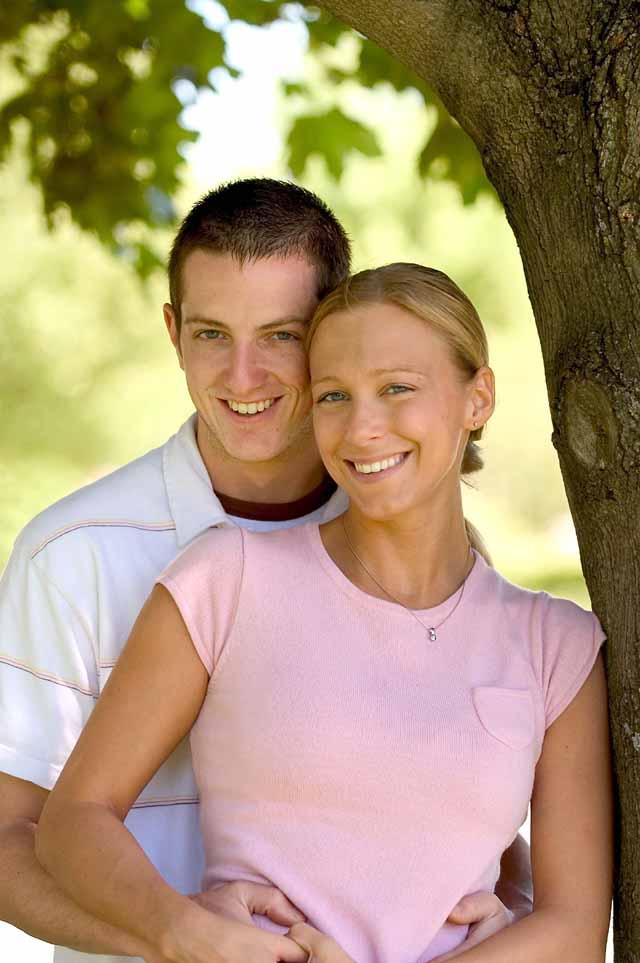
Why do couples want or need an engagement session?
Let's face it. Most couples will only hire a professional photographer for their wedding. That's about it. For all other photos throughout their lives, they will either shoot these themselves, ask a friend to do it, or simply go to Sears, JC Penney's, Walmart or maybe Olan Mills.
These firms all offer excellent value, but they don't go into the field. They are "studio" portrait companies.
So what if you want a professional quality photo at a location other than a studio with a "studio background?" You need to hire a professional location photographer.
But didn't I just say most people only hire a professional photographer for their wedding? It's true. But isn't your engagement part of your wedding? It is!
When you only have photos taken at your wedding, they are all going to be with you dressed in "formal" attire. The bride will be in her wedding dress and the groom will be in his tux. But often a casual photo taken in a non-formal environment can be really special. Perhaps a photo in a park or forest preserve would look nice. Or consider doing a "shopping" day and having the photographer photograph you in action. Or how about going to an amusement park like "Great America" and having the photographer take photos of you enjoying your day! The more creative you get, the better these photos can be!
Engagement photos can be used for a variety of purposes. Many people use them as engagement announcements or wedding announcements for the local newspaper. Others just want a good photo for their desk at work. Still others will use them to create place cards at their weddings so their guests will know what table they are seated at during the reception.
Photographers like engagement sessions for a couple of reasons. First, it's a great way to get to know clients better. And, these sessions offer the opportunity to see how well the couple photographs. So by the time the wedding actually happens, the best angles to photograph the bride and groom are already known.
So consider an engagement session for your wedding and get some professional "casual" photos of you having fun!
Wednesday, October 19, 2005
Uncle Harry
I can't write about my old camera and my dad's influence on me in photography without mentioning my Uncle Harry.
I think everyone has an Uncle Harry in their family. Well, maybe he's not named Uncle Harry in your family, but still he's the guy always taking pictures at family events. You've got one of those, right? :)
Anyway, Uncle Harry was always taking pictures. In fact, I don't think we ever saw him without a camera. He was very well known in our community and everyone called him Uncle Harry, even those who weren't related to him. But he was loved anyway and he was the guy who took everyone's picture.
He documented all of us growing up with his pictures. And after taking all those great B&W photos (he shot mostly in B&W), he would develop the film, print them in his own basement lab and give us all the photos.
When Uncle Harry passed away, everyone lost their favorite photographer. But he's still loved and admired even today. Mention his name to anyone in our community and you get a smile and a quick, "Ah, Uncle Harry! Yes, I miss him..."
I wonder if I'm now the new Uncle Harry of my generation...
No... there will never be anyone like my Uncle Harry. Nobody even comes close.
I think everyone has an Uncle Harry in their family. Well, maybe he's not named Uncle Harry in your family, but still he's the guy always taking pictures at family events. You've got one of those, right? :)
Anyway, Uncle Harry was always taking pictures. In fact, I don't think we ever saw him without a camera. He was very well known in our community and everyone called him Uncle Harry, even those who weren't related to him. But he was loved anyway and he was the guy who took everyone's picture.
He documented all of us growing up with his pictures. And after taking all those great B&W photos (he shot mostly in B&W), he would develop the film, print them in his own basement lab and give us all the photos.
When Uncle Harry passed away, everyone lost their favorite photographer. But he's still loved and admired even today. Mention his name to anyone in our community and you get a smile and a quick, "Ah, Uncle Harry! Yes, I miss him..."
I wonder if I'm now the new Uncle Harry of my generation...
No... there will never be anyone like my Uncle Harry. Nobody even comes close.
My Cameras
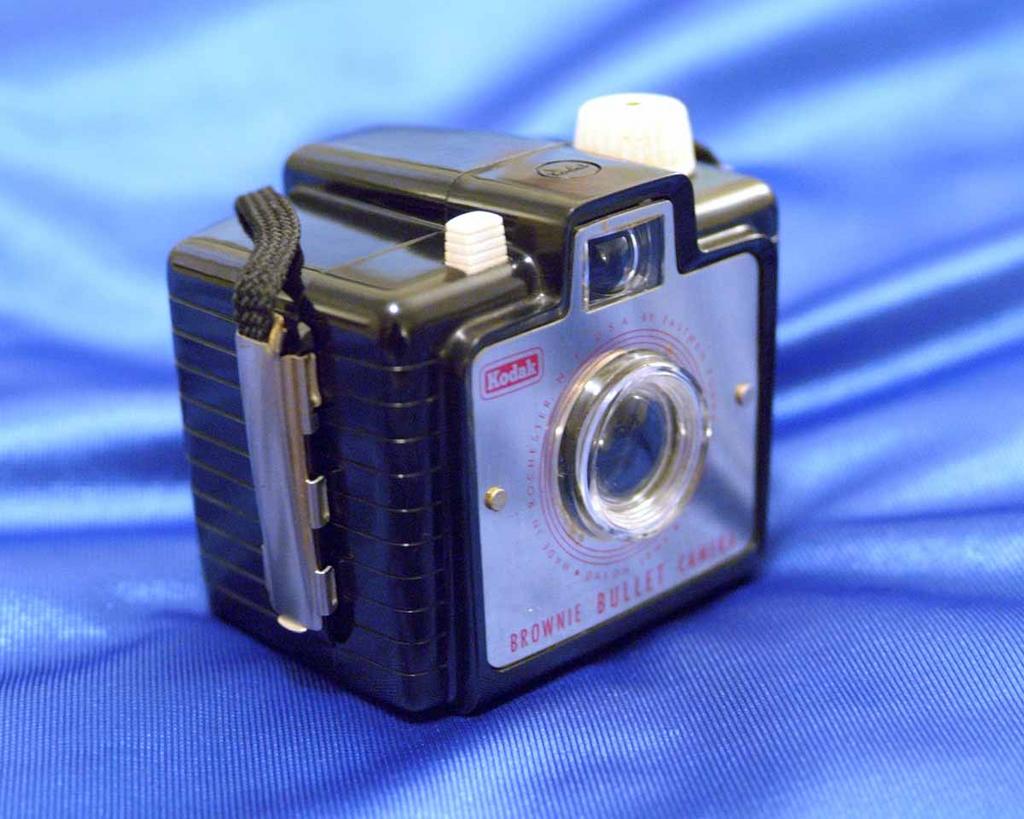
This is my first camera... a Kodak Brownie Bullet Camera.
I'm not quite sure what year my dad bought this for my brother and me (we each had one) but if I had to guess I would think it could have been back around 1963 or 1964.
I can see you all trying to calculate my age from that, right? :)
Anyway, I was still quite young, but recall running around the house pretending to take pictures. On occasion, we had film in the camera, but not all the time. It didn't matter to me. I just thought it was cool to take "fake" pictures too.
My dad was also into photography. When he was younger, he had a complete B&W darkroom setup. Some of the cameras he had included a Speedgraphic 4x5 view camera (reminds me of the old "gangster days" when the press all had these huge cameras), an old Argus 35mm rangefinder camera and a Polaroid Land Camera. I still have the Argus camera and will post a picture of it soon. The Speedgraphic is around too, but I'm not sure where in my house I have that... but I think the Polaroid is gone because I haven't seen it in such a long time.
So you see, it was really my dad who got me started into photography. Sure, I was just playing around with his cameras and my old Brownie camera back then and never really thought that I'd end up as a photographer. But the things we do as kids do tend to stick with you.
Later, after I had graduated from college, I bought a Canon AE-1 Program 35mm camera to take on a trip to Hawaii. I still have that camera and used it for several of my earliest weddings. After I got married, I took over my wife's Nikon FE camera with which I shot the majority of my weddings in the early 1990's. A Bronica SQ-A medium format 2-1/4 camera was to come later for all my studio work with my brides in the 90's as well.
Today, I shoot mostly with Nikon gear because I'm so familiar with their system. My Fuji S-3 is based on a Nikon body and uses Nikon lenses too, so I consider that also a Nikon clone. At my positions with two police departments and the DA's office in San Diego, I did all my crime scene work with Nikon FM-2 cameras. Ah, those were the days!
Maybe one day, I should just show up to a wedding with just the Kodak Brownie camera in hand and start taking "fake pictures" of the bride. What a surprised look I'd probably get! I can just see it now... :)
Tuesday, October 18, 2005
Horse-Drawn Carriages
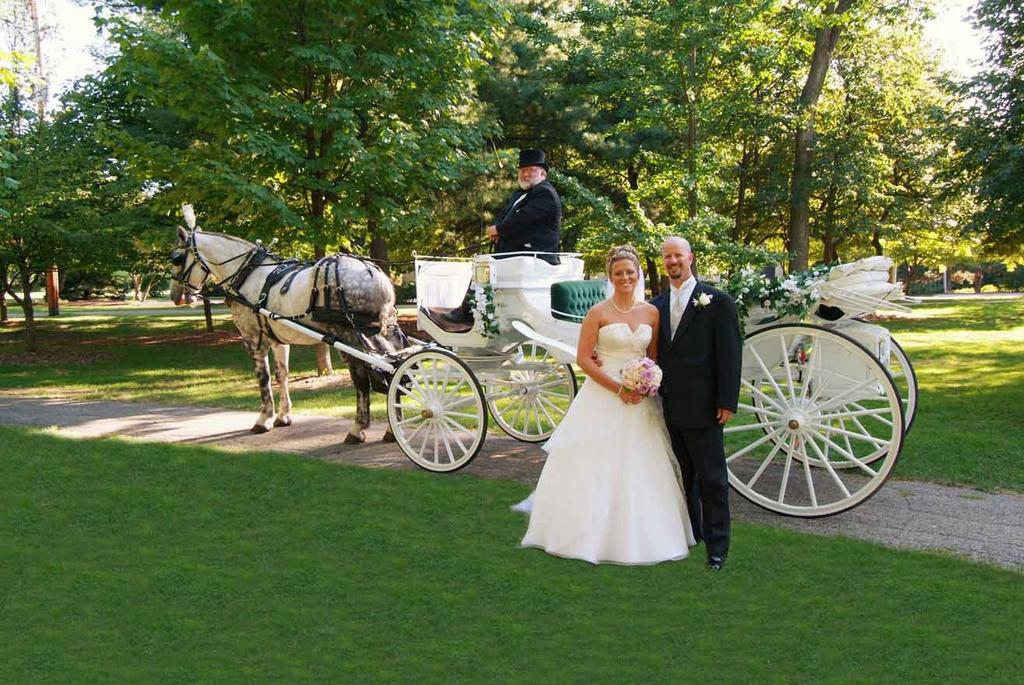
Don't you think this is a cool thing to have at your outdoor wedding?
When I was taking photos out in San Diego, I had a lot of cool things to shoot... military weddings with crossed swords, great San Diego coastline photos at sunset, and horse-drawn carriages!
Recently, I shot a wedding that reminded me so much of my early days of shooting weddings because they had a carriage. It really made their wedding unique. The bride rode in on the carriage with her dad and then the bride and groom rode off after the wedding in the carriage! Later we took more photos of them in the carriage and next to it as well.
If you have the opportunity to do something like this at your wedding, do it! People won't forget it and will be talking about it for years.
Monday, October 17, 2005
How Important is MegaPixel Count?
It's really funny whenever I hear this question... "So how many megapixels is your camera?"
I think I get this question several times a night at every wedding I shoot and sometimes when I do consultations with potential clients.
If I said, "I shoot with a 6.1 MP camera" and the person asking the question has one of the new 8 MP point & shoot $399 cameras, would that mean his camera is better than mine? If that were the case, why is my primary camera and lens over $3000?
Or if I said, "I shoot with a 12.3 MP camera" would that mean that I'm a better photographer simply because my camera "out-megapixel'ed" the other camera?
Nikon has a professional camera called the D2Hs that sells for $3500 without a lens. It's a 4.1 MP camera. But what a camera it is! It's the fastest camera out there for sports shooters (ok, I can hear the Canon fans booing me now) but it's only 4.1 MP. Why would a pro buy a 4.1 MP camera over a $399 8 MP camera? Makes you wonder doesn't it?
Megapixel count has become the standard by which many people base their purchasing decisions when buying a new digital camera. Oh, and small size seems to be a big factor too. But when it comes to professional photography, those things aren't as important as other factors.
There are image sensors and then there are image sensors. Some at 4.1 MP will blow away the image quality from others whose sensors are 8 MP or greater. All is not equal when it comes to megapixels.
I use three cameras at most weddings. Two are 6.1 MP cameras and the other is 12.3 MP. Why don't I just use the 12.3 MP on all my shots? Well, first, I doubt very seriously that many people can tell much difference between the two in terms of resolution for a typical 11x14 or smaller image. If you increase that to 16x20 or larger, perhaps you might see some quality improvement with the 12.3 MP camera. But that's not why I use the 12.3 MP camera. That camera happens to have the ability to produce great images for outdoor shots and for natural ambient light photos. It's much better than the other two cameras. But the 6.1 MP cameras I use give me more flexibility in post production corrections than the 12.3 MP camera. So I use those cameras often for shots with flash photography.
It's more involved than I care to comment on here on a blog, but suffice it to say that each camera has its strengths and weaknesses. But they are all far superior over most people's $399 point and shoot digital cameras with the larger 8 MP sensors.
That brings us to another point... why do point & shoot digital cameras have such small lenses that zoom in from ultra wide angle to telephoto ranges when big SLR (single lens reflex) digital cameras have such large lenses that only seem to zoom in small focal ranges? That will be covered on another installment!
What does this all mean for your wedding? Well for starters, nothing. It doesn't much matter what the photographer uses to capture your wedding day images as long as he or she is competent in handling the equipment used and has the artisitic ability to capture the image in a pleasing stylistic way. I've often said that it would be really cool to walk into a wedding wielding my cheap Fuji F10 point and shoot camera and taking an entire wedding day's worth of images from it. I bet it would look fantastic and the bride and groom probably would be just as happy with those shots as the ones that could have been shot with my cameras that cost mega-dollars. Why? Because I shot them, that's why!
Proper composition, lighting adaptations and other factors are more important than mega-pixels whether it comes from a point & shoot camera or an SLR. The photographer makes the image, not the camera. This is why I don't mind when others shoot next to me when I shoot the "formals" at weddings. I know my images are going to blow theirs away when they are compared. It just makes me look even better when they shoot! :)
I think I get this question several times a night at every wedding I shoot and sometimes when I do consultations with potential clients.
If I said, "I shoot with a 6.1 MP camera" and the person asking the question has one of the new 8 MP point & shoot $399 cameras, would that mean his camera is better than mine? If that were the case, why is my primary camera and lens over $3000?
Or if I said, "I shoot with a 12.3 MP camera" would that mean that I'm a better photographer simply because my camera "out-megapixel'ed" the other camera?
Nikon has a professional camera called the D2Hs that sells for $3500 without a lens. It's a 4.1 MP camera. But what a camera it is! It's the fastest camera out there for sports shooters (ok, I can hear the Canon fans booing me now) but it's only 4.1 MP. Why would a pro buy a 4.1 MP camera over a $399 8 MP camera? Makes you wonder doesn't it?
Megapixel count has become the standard by which many people base their purchasing decisions when buying a new digital camera. Oh, and small size seems to be a big factor too. But when it comes to professional photography, those things aren't as important as other factors.
There are image sensors and then there are image sensors. Some at 4.1 MP will blow away the image quality from others whose sensors are 8 MP or greater. All is not equal when it comes to megapixels.
I use three cameras at most weddings. Two are 6.1 MP cameras and the other is 12.3 MP. Why don't I just use the 12.3 MP on all my shots? Well, first, I doubt very seriously that many people can tell much difference between the two in terms of resolution for a typical 11x14 or smaller image. If you increase that to 16x20 or larger, perhaps you might see some quality improvement with the 12.3 MP camera. But that's not why I use the 12.3 MP camera. That camera happens to have the ability to produce great images for outdoor shots and for natural ambient light photos. It's much better than the other two cameras. But the 6.1 MP cameras I use give me more flexibility in post production corrections than the 12.3 MP camera. So I use those cameras often for shots with flash photography.
It's more involved than I care to comment on here on a blog, but suffice it to say that each camera has its strengths and weaknesses. But they are all far superior over most people's $399 point and shoot digital cameras with the larger 8 MP sensors.
That brings us to another point... why do point & shoot digital cameras have such small lenses that zoom in from ultra wide angle to telephoto ranges when big SLR (single lens reflex) digital cameras have such large lenses that only seem to zoom in small focal ranges? That will be covered on another installment!
What does this all mean for your wedding? Well for starters, nothing. It doesn't much matter what the photographer uses to capture your wedding day images as long as he or she is competent in handling the equipment used and has the artisitic ability to capture the image in a pleasing stylistic way. I've often said that it would be really cool to walk into a wedding wielding my cheap Fuji F10 point and shoot camera and taking an entire wedding day's worth of images from it. I bet it would look fantastic and the bride and groom probably would be just as happy with those shots as the ones that could have been shot with my cameras that cost mega-dollars. Why? Because I shot them, that's why!
Proper composition, lighting adaptations and other factors are more important than mega-pixels whether it comes from a point & shoot camera or an SLR. The photographer makes the image, not the camera. This is why I don't mind when others shoot next to me when I shoot the "formals" at weddings. I know my images are going to blow theirs away when they are compared. It just makes me look even better when they shoot! :)
Sunday, October 16, 2005
Tents
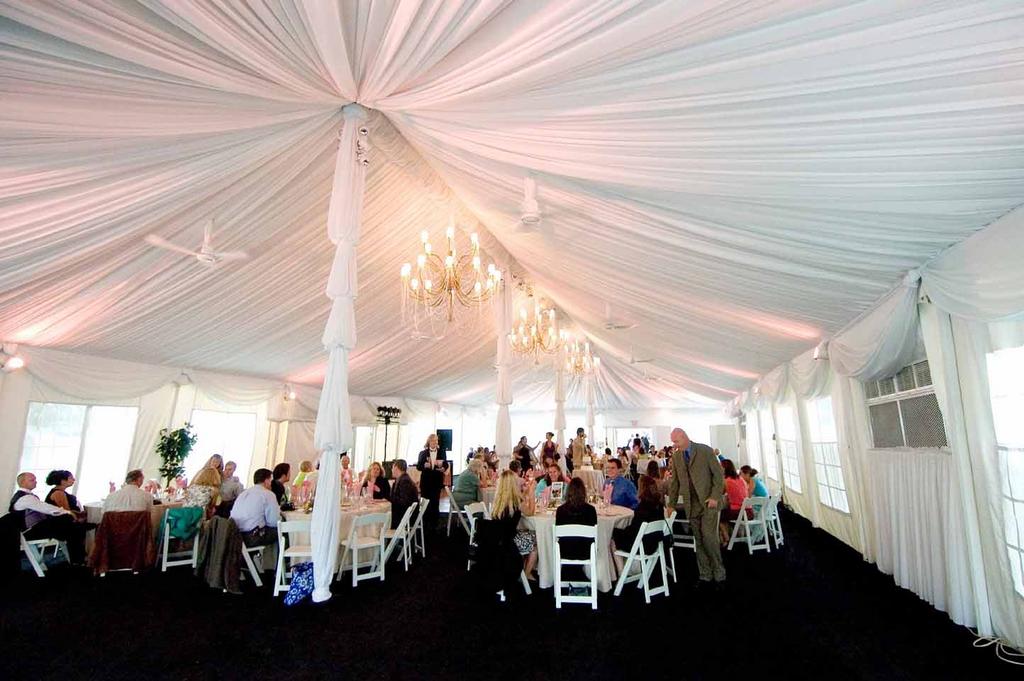
This year I shot quite a few weddings in tents. It seems tents are a popular option for backyard weddings and other outdoor weddings.
This particular tent was at the Lake County Discovery Museum in Wauconda, IL. What I liked about this tent was that it was very well lit and the fabric inside the tent was very unique. Because of this, I decided to shoot it with an ultra-wide angle lens point up toward the apex of the tent. The slight distortion of the wide lens really gives a unique view of the tent. Oh, and the air conditioning inside was REALLY COLD! That is until all the people showed up and heated up the place. :)
Tents are also very good for bounced lighting techniques. It's like shooting in a huge umbrella! Umbrellas are often used for light diffusion in studios. It creates a nice soft look on people. So you see, when you shoot in a tent, you get a studio look at your wedding!
Subscribe to:
Posts (Atom)